Accurate and Continuous Collection of P Production Data
IoT Installations is a consultancy service that ensures production data from machines is collected accurately, continuously, and in a standardized structure. It provides end-to-end guidance from the design of the data collection infrastructure to commissioning, testing, and optimization processes.
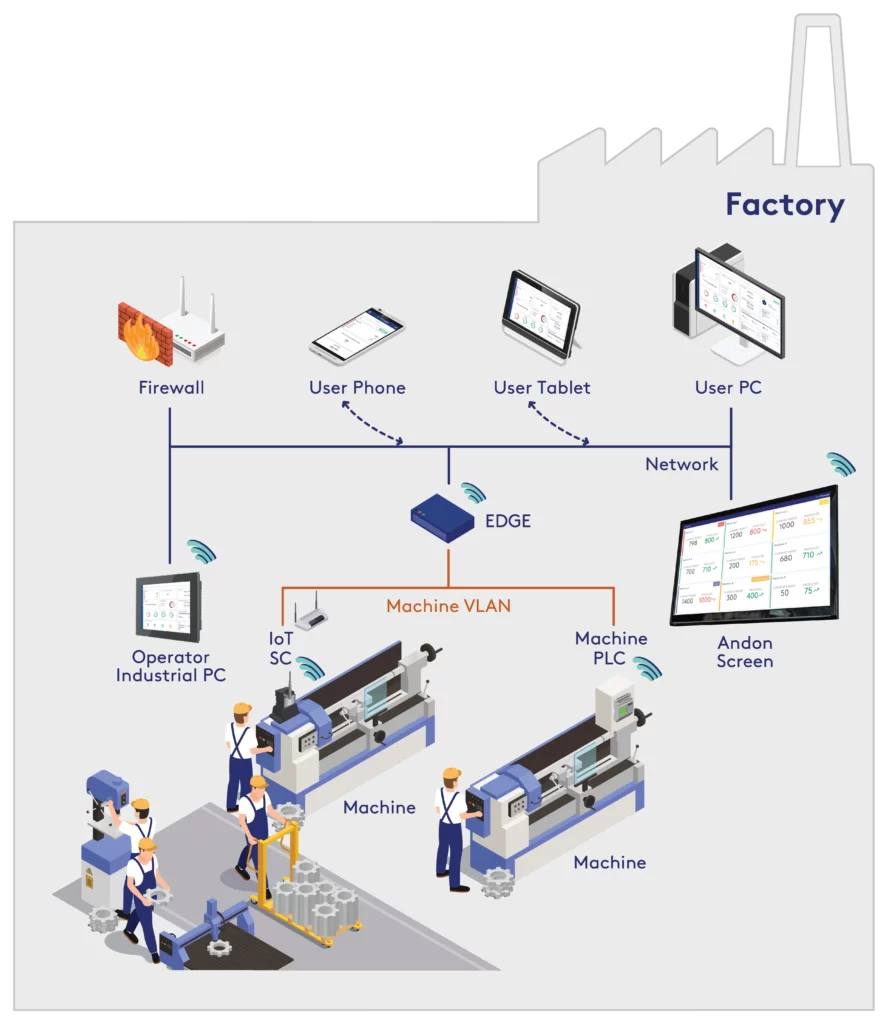
IoT Installations offers a structured installation and consultancy approach to ensure that data generated on the production floor is collected reliably and transmitted securely to the ProManage infrastructure. Maintenance and IT teams of the organization, together with integration stakeholders, work in coordination to design, commission, and sustain the data collection architecture. The objective is to guarantee data quality and establish a continuous and stable data flow.
What Are IoT Installations and What Do They Provide?
IoT Installations cover architectural design and implementation processes that enable systematic collection of production data from machines. This service not only aims to establish the data collection infrastructure but also to validate, test, and operate it sustainably.
It clarifies from which point, by which method, and through which structure production data will be collected. Thus, the data collection process is standardized, and potential inconsistencies that may occur on the shop floor are prevented.
Data Collection Architecture and Roadmap
Within the scope of IoT Installations, the first step is designing the data collection architecture. At this stage, clear answers are defined for the following questions:
- Which data will be collected?
- From which machine or point will it be obtained?
- By which method will it be transmitted?
This architectural design forms the foundation of the data collection process. The roadmap defines the steps to be followed from the design phase to the commissioning process.
Standardization of the Data Collection Systematics
During the data collection process, the signal–tag–interpretation approach is standardized. This approach ensures that data received from the shop floor is correctly classified and interpreted.
A standardized data collection structure:
- Supports consistent data generation.
- Establishes a common language across different machines.
- Facilitates analysis and reporting processes.
Network Structure and Communication Performance Assessment
Within the IoT Installations process, the network structure and communication performance are evaluated. The objective is to establish an infrastructure that ensures stable data flow.
Within this scope:
- The existing network structure is analyzed.
- Communication performance is reviewed.
- Potential bottlenecks in data transmission are identified.
Stable data flow is of great importance to ensure that production data reaches the central system without interruption.
Signal Connections and Validation Steps
Signal connections are addressed within the scope of IoT Installations under a control plan framework. Test scenarios and acceptance criteria are defined.
At this stage:
- Signal connections are checked.
- Test scenarios are implemented.
- Validation is performed according to acceptance criteria.
Thus, technical validation is completed before moving to the commissioning phase, and the risk of errors is minimized.

-
Communication Issues and Root Cause Analysis
IoT Installations also include diagnosing communication issues and determining corrective actions. In case of potential communication problems: • Problem diagnosis is conducted. • Root cause analysis is performed. • Corrective actions are planned. In this way, communication-related risks are minimized and data continuity is maintained.
-
Commissioning and Sustainable Operation
IoT Installations proceed with checklists during the commissioning process. After installation, a sustainable operation approach is established. Within this scope: • Commissioning steps are verified. • Test results are evaluated. • Standards to be followed during operation are defined. The objective is not only to establish the data collection infrastructure but to ensure its stable operation in the long term
-
Competency Development for Maintenance Teams
IoT Installations aim to enable maintenance authorities and technical teams on the shop floor to reach a competency level where they can manage the data collection infrastructure.
-
Data Collection Systematics and End-to-End Flow
The data collection systematics and end-to-end flow structure are transferred to maintenance teams. It is detailed how the data collection process progresses from the starting point to the central system.
-
Network Structure and Components
The data collection network structure and the components used are explained. Teams are enabled to correctly evaluate the infrastructure.
Signal Checks and Validation Methods
Signal checks and validation methods are taught. Thus, shop floor teams can detect potential errors at an early stage.
Communication Performance Monitoring
Methods for monitoring communication performance and identifying problems are conveyed. This approach supports the continuity of data flow.
Adding and Commissioning a Smart Counter
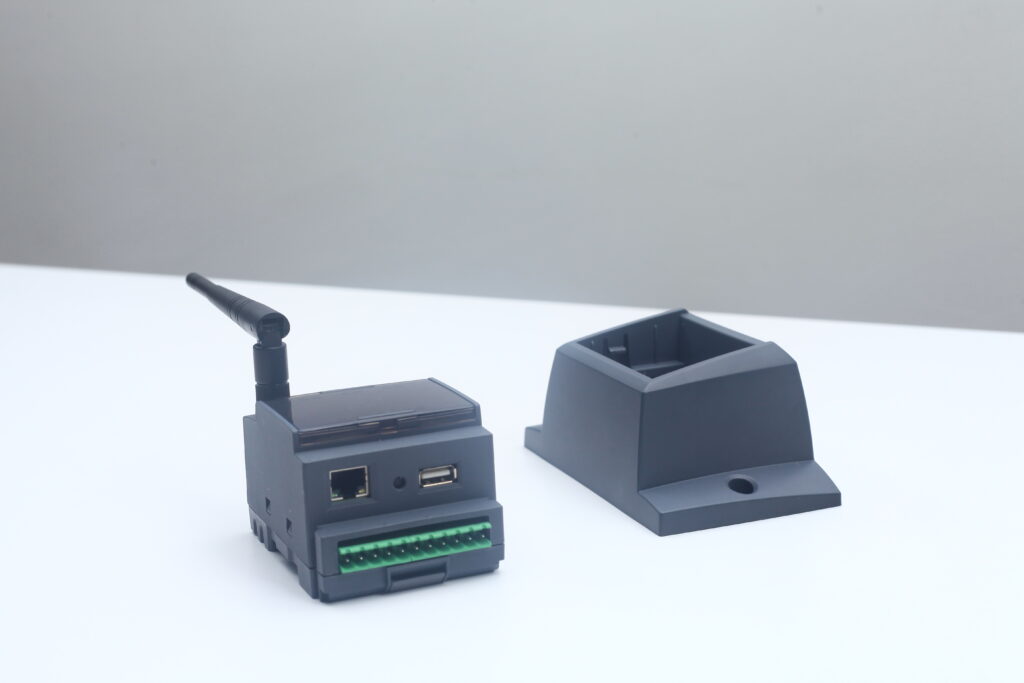
The steps for adding and commissioning a new Smart Counter to the network are addressed practically. Thus, it is aimed that maintenance teams can act independently during system expansion processes.

Frequently Asked Questions
IoT Installations cover data collection architecture design, network evaluation, validation of signal connections, analysis of communication problems, and commissioning processes.
Standardization of the signal–tag–interpretation approach ensures data consistency and analysis accuracy. A standardized structure is the foundation of sustainable data quality
Problems are diagnosed, root cause analysis is conducted, and corrective actions are planned. The objective is to restore stable data flow.
Maintenance teams reach a competency level where they can manage the data collection infrastructure. They gain knowledge in network structure, signal checks, and performance monitoring.
Yes. The steps for adding and commissioning a new Smart Counter to the network are addressed within the scope of training and implementation.
Discover Digital Solutions
Tailored to Your Industry